Maybe already running your distribution business. Or still in school, studying hard to build a better tomorrow for yourself. Or maybe not even born yet.
A great example is “surgical gloves.” You may have heard or seen—in media coverage or TV police procedurals—a criminal said to be wearing surgical gloves while committing a crime, whether it’s a bank heist or (shudder) a serial killer at work.
We frequently hear from customers who say they bought gloves from another vendor at a low price, but they can’t find that deal again. In fact, that vendor can’t seem to source the glove at all.
If you’re an industrial distributor, you’ve likely come across vendors who can’t be trusted to consistently deliver what you need at a price that works for you. Sure, it’s nice to save a few bucks here or there on a case of gloves, but can you count on that arrangement to hold up over time?
We often have conversations about this question with customers and partners, and while the precise answer may vary, we aim to keep it simple: We help our customers buy the right disposable glove for the job. And we effectively reduce risk with expert services and tools.
Since the company’s founding in 1988—yes, in March we’re coming up on 35 years in business—we’ve been helping our clients with all aspects of global procurement, supply chain, and operations to ensure quality and efficiency in the single-use glove market.
Most economists are in agreement on one word to describe what 2023 holds for the U.S. economy: uncertainty. The divergence of views on what will happen is as large as it has been in many years.
A steady drumbeat of “recession is coming” rattled around the public consciousness for the last half of 2022. The Federal Reserve raised interest rates seven times last year in an effort to throttle inflation. Underperforming stock markets have not helped matters.
The new year has the potential to be wildly successful for distributors that sell disposable gloves. In 2023, the $15 billion-plus market will continue to evolve as we put the worst of the pandemic behind us.
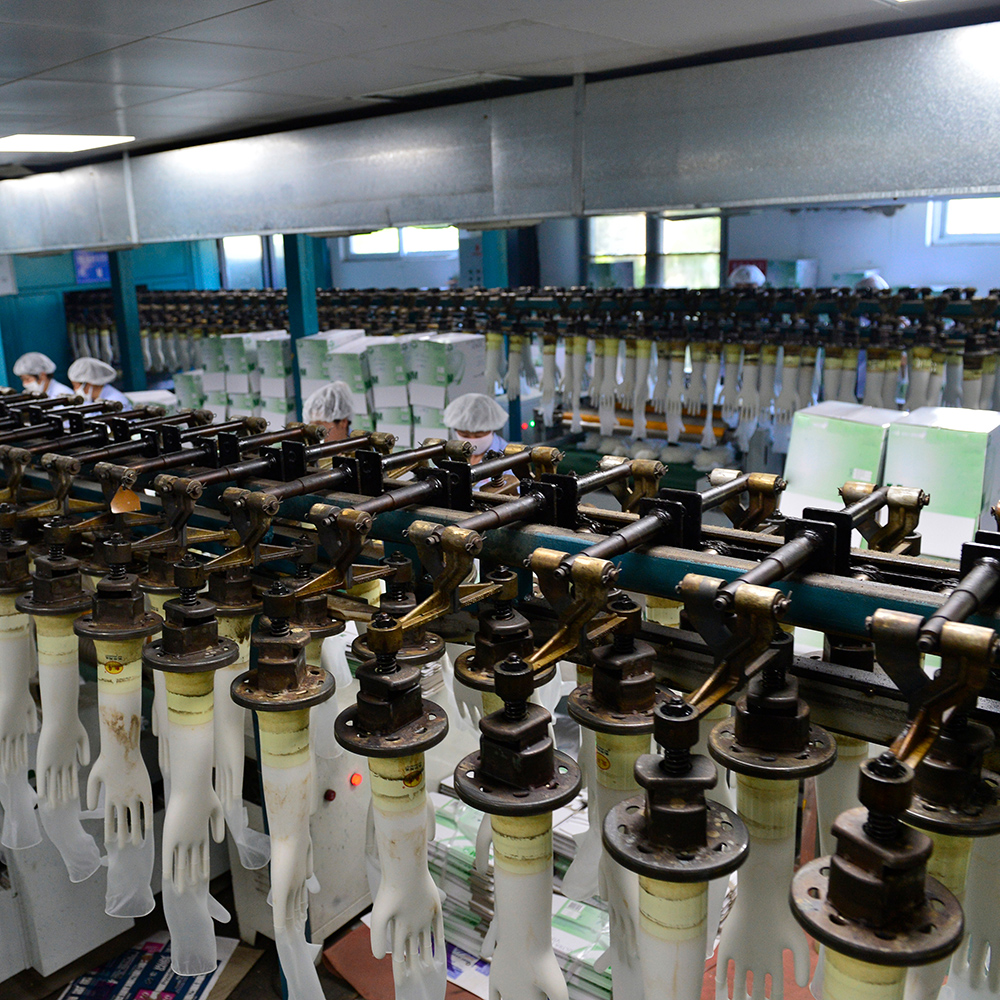
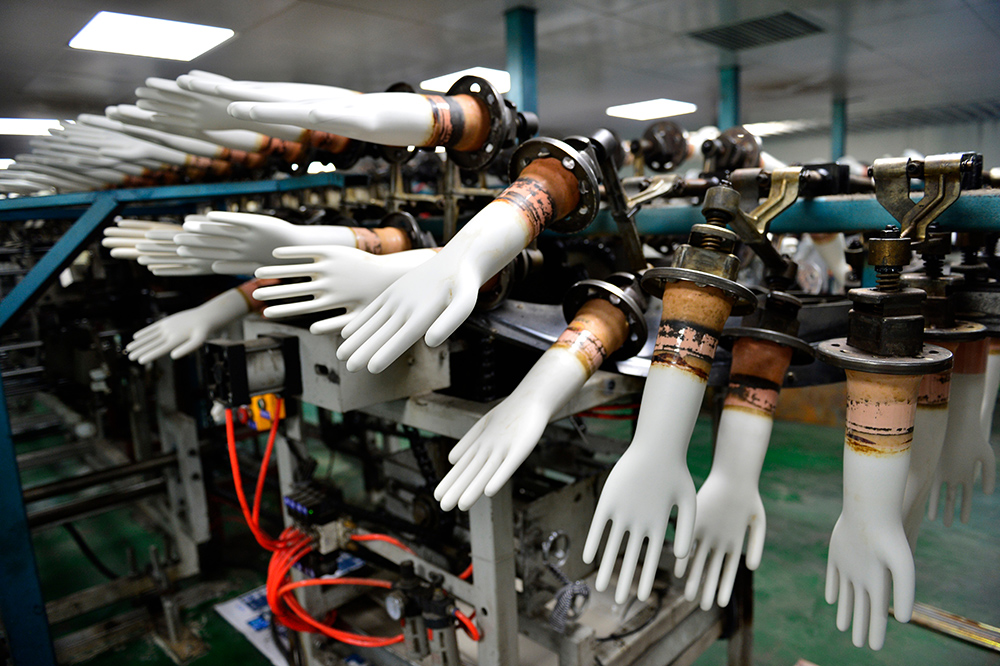
After gloves go through the production process—formers dipped in solution, dried in high heat, rinsed in a chlorinated solution (in the case of latex), dried again—their interior needs to be finished.
This process makes it easier to pull on and remove gloves. Without interior finishing, gloves can stick to skin and cause a struggle to get them on or off.
We frequently get questions about what’s involved in making gloves. We’ve also published a few blog posts over the years describing the manufacturing process, and they’re always among our most popular.
Latex allergies get a lot of attention, especially in the disposable glove business. An important part of finding “the right glove for the job” is determining whether the person wearing said glove is allergic to natural rubber latex proteins, and recommending substitutes if necessary.
In truth, such allergies are rare. They affect approximately 1 percent of the general population and 8 to 12 percent of healthcare workers. (Latex allergies become more prevalent in people who are exposed to the material regularly, and most medical-grade gloves are made from latex.)
The trend toward workplace safety is clear over the last 30 to 40 years. In 1980, probably 1% of auto mechanics used disposable gloves. In 2022, that figure is much higher—and because it’s still relatively small in the context of the overall industry, there is lots of room to grow.