While you may be aware of how various applications call for different disposable glove materials, how much do you know about glove textures?
Get a Grip: A Glove Texture Introduction


While you may be aware of how various applications call for different disposable glove materials, how much do you know about glove textures?
Given the many uses for disposable gloves, they must undergo rigorous inspection before they are ready for sale. In the automotive, janitorial-sanitation and agricultural industries, workers deal with a number of harsh chemicals, which means the gloves they wear must be proven to provide the right amount of protection. The same is true for medical applications, where employees need a safe barrier against pathogens.

When it comes to using disposable gloves, opportunities are everywhere. In fact, we have received so many great contest entries for our Annual AMMEX #NotWithoutGloves Twitter Contest, reminding us of the countless opportunities of what not to touch – not without gloves. There are many opportunities for disposable glove distributors too. Consider the products that you or your customers sell; many may contain multiple chemicals. Did you know that there are six common chemicals that require disposable gloves? In fact, there are many common chemicals that require disposable gloves according to OSHA and as stated by many manufacturers instructions on product packaging. Along with warmer weather, Spring also brings many overdue home projects that involve the use of common chemicals. These chemicals can be found in products such as pesticides, wood stains, and paints and lacquers. Before your next project, read the product instructions and protect yourself from these six common chemicals that require disposable gloves.
Continue reading “Six Common Chemicals that Require Disposable Gloves”
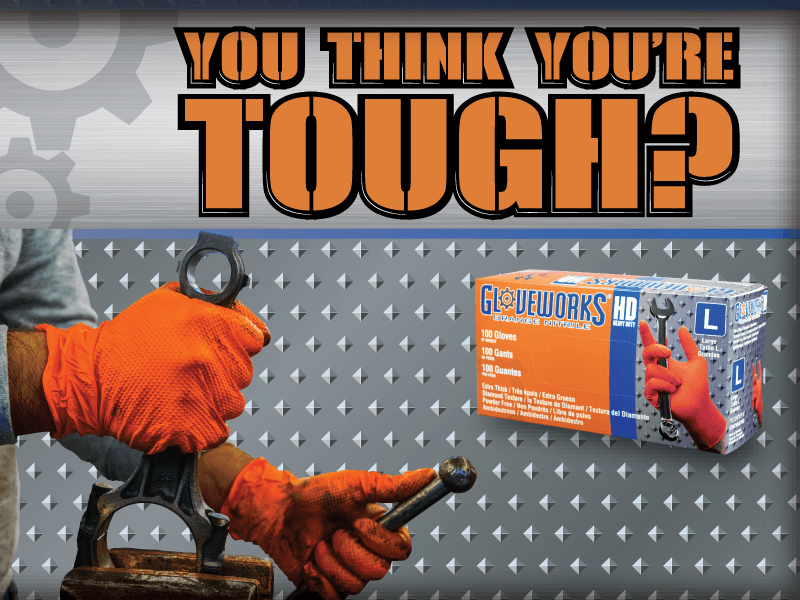
Gloveworks Heavy Duty Orange Nitrile Gloves have an aggressive texture for superior grip. While AMMEX Corporation is typically known for black nitrile gloves, we stepped outside of the box to deliver a product most people have not seen before. Orange Nitrile: Give Your Sales Team the Best!
Unique color for high visibility
One of the first things you will notice about our orange nitrile gloves is their bright color. We ramped up our nitrile gloves with a hue that will be seen even in dark environments, including garages and industrial environments. This color means no more lost gloves and is a fitting match for other brightly colored personal protective equipment.
Heavy, aggressive texture for strong grip and durability
These ambidextrous gloves also have a diamond-raised texture on both sides for a non-slip grip. This texture is present on the palms and fingertips and particularly helpful for oily environments. As a result, automotive, manufacturing and industrial technicians who handle tools do not have to worry about their equipment sliding out of their hands while they work on vehicles and machines.
Not only does this texture provide superior grip, it also offers additional thickness for increased durability. In fact, our orange nitrile gloves are three times more puncture resistant than latex. In addition, the texture does not compromise comfort, as the gloves are more elastic than vinyl and conform to hands as they are warmed by body heat.
These gloves feature a beaded cuff to stop ripping and tearing at the base. This feature also makes the gloves easier to don.
Added thickness for superb chemical resistance
If you think visibility, durability and grip are all impressive features of our orange nitrile gloves, wait until you hear about their chemical resistance. The extra thickness allows wearers to work with harsh chemicals such as iodine, butane and pesticides for a longer period of time before they have to change gloves, allowing for greater cost savings due to fewer glove changes.
Get on board with our premium gloves
Our Gloveworks Heavy Duty Orange Nitrile Gloves, which measure 9.5 inches from base to fingertip and are available in sizes medium to extra extra large, are perfect for a number of applications, including: agricultural, automotive, industrial safety, manufacturing, paint shops and plumbing. Additionally, they come 100 gloves to a box and 10 boxes to a case to provide the supply you need.
Orange Nitrile: Give Your Sales Team the Best! Contact your AMMEX representative to add these gloves to your product line. Or, if you would like to become a distributor, contact us today!

Whether customers seek no-chip manicures or a relaxing foot massage, nail and beauty technicians need barrier protection to guard themselves against harsh chemicals and pathogens. This presents a large sales opportunity for distributors of disposable gloves and masks.
Continue reading “Barrier Protection Needs in the Beauty Industry”
Where do disposable gloves come from? While you may not hear that question as often as “Where do babies come from,” this makes the process no less interesting. In fact, the supply chain is an international network that includes manufacturers, distributors and shippers.
Continue reading “Start to Finish: The Disposable Glove Supply Chain”
Lacquer and paint thinners are harsh solvents that should not be handled without the correct personal protective equipment (PPE). This is because these substances, which are used in the construction, automotive, retail and maritime industries, present several health risks when they are not handled safely.
Continue reading “Not without Gloves: Lacquer and Paint Thinners”
You may be a superstar at selling disposable gloves but what should you do to boost your sales even further? If you know anything about heroes, whether caped crusaders or your local firefighters, you know they never have to work alone when fighting the good fight.
Continue reading “Accelerate your Disposable Glove Sales with AMMEX”
There are a number of things you shouldn’t touch without gloves, but AMMEX has you covered with superior barrier protection. Perchloroethylene is a non-flammable, colorless, volatile organic compound frequently used in dry cleaning applications. It is also known as tetrachloroethylene, PCE and PERC. While dry cleaning fabrics is the most common use for PERC, it is also used to manufacture other chemicals, such as chlorofluorocarbons, rubber coatings, insulating fluid or cooling gas for electrical transformers, solvent soaps, printing inks, adhesives, leather treatments and automotive cleaners, among others.
Latex allergies have serious consequences for health care and industrial workers as well as patients. Individuals experience a range of reactions from coming into contact with latex, including contact dermatitis and anaphylaxis, which is life-threatening. These reactions stem from the natural rubber latex proteins. Although latex gloves provide the best fit and feel, they are not the right choice for those with latex sensitivities. It’s crucial for people who come into contact with latex to understand the symptoms of a reaction.