Sustainability and Disposable Gloves: 2024 and Beyond

You probably hear the word “sustainability” a lot these days. That’s a good thing: Sustainability is about creating an equilibrium where we live within the limits of what Earth can provide, to ensure a balanced and healthy planet.

AMMEX is focused on delivering products and solutions through sustainable processes for our customers and operating our business in a responsible way. In 2024, we are committed to an agenda of achieving measurable targets.

Continue reading

Food Safety: Handwashing, Nitrile Gloves Are a Dynamic Duo

Gloved hands in a bakery.

Avoiding cross-contamination and the spread of bacteria in food service establishments is a perennial struggle. Washing dishes, pots, and pans at high temperatures, and thoroughly cleaning and sanitizing all surfaces, are common and effective means of combating germs and assorted microorganisms.

One of the most important defenses against food poisoning, however, is proper handwashing. Hands can spread germs in both the kitchen and the dining area; some of these germs, like salmonella, can make employees (and, even worse, customers) sick. Washing hands frequently with soap and warm water is an easy way to limit the spread of germs.

Continue reading

Currency Exchange Rate Provides a Key Glove Market Insight

Last in a series

Currency has real impact on disposable glove prices. The currency exchange rate has been favorable to U.S. buyers in the single-use glove market the last few months, with a strong dollar trading at its highest rate in 20 years. If the dollar should stumble, glove prices are likely to feel upward pressure.

That is why it’s important to monitor international markets closely. If you hear the dollar is weakening, be prepared—and prepare your customers for what could lie ahead.

Continue reading

Logistics, Currency Issues Complicate Single-Use Glove Market

A container ship sails into the sunset.

Third of four parts

Throughout 2023, due to higher interest rates in the United States, the U.S. dollar exchange rate has been strong when compared with Asian currencies—and that helped to keep glove prices lower. The dollar exchange rates are now off their highs, which will erode the buying power of U.S. buyers.

This is all the more reason to order early and fill your inventory before outside factors complicate the market. AMMEX boasts a 98%-plus fill rate on its top products, so you stand to take advantage of an excellent opportunity.

Continue reading

China Adds Volatility to Glove Market With Nitrile Push

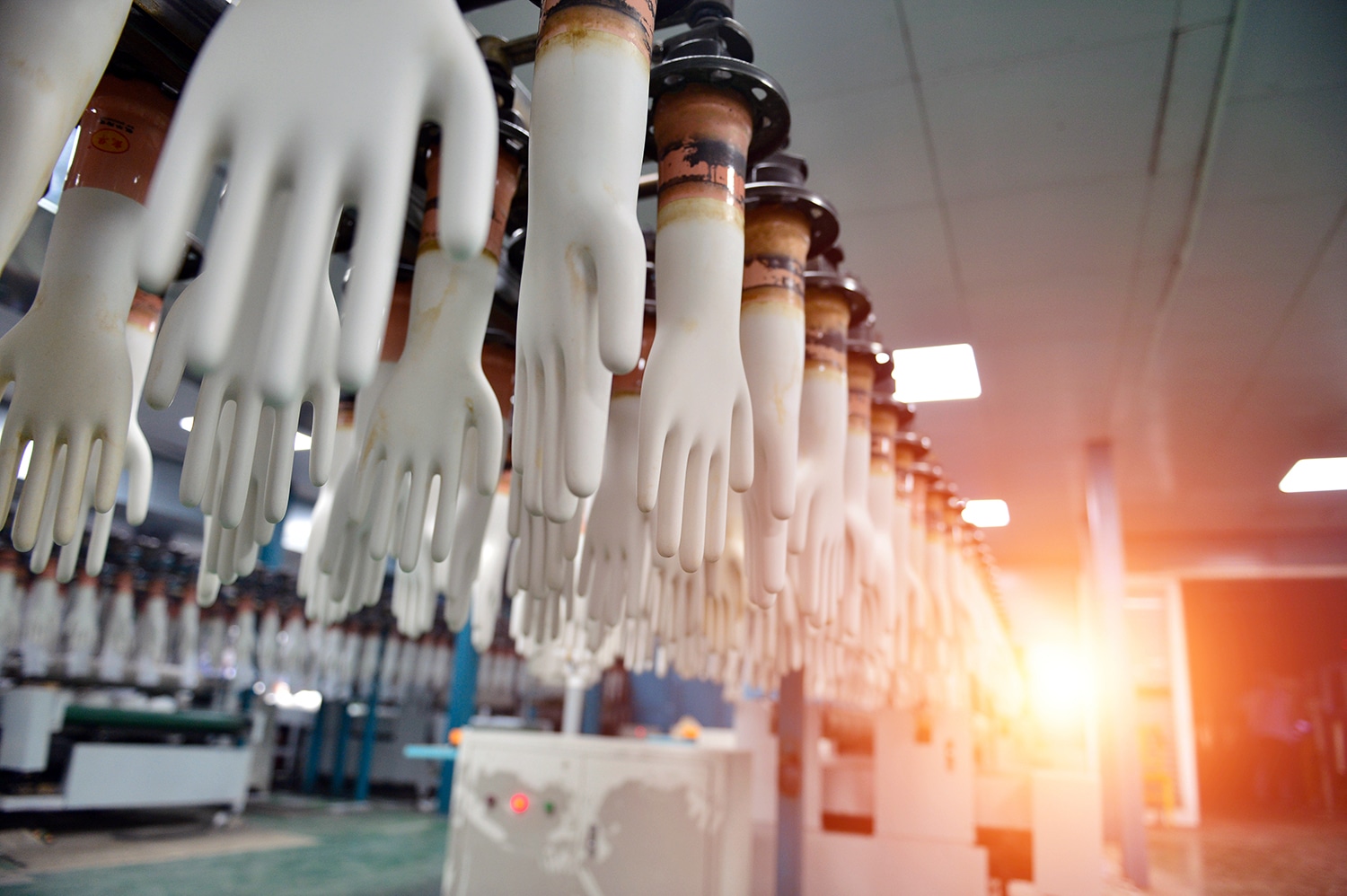
Disposable gloves hang from hand formers at a factory.

Second of four parts

Pre-pandemic, China was a minor player in the nitrile disposable glove market. Post-pandemic, it has substantially grown its overall nitrile production capacity and is expected to grow it further.

In the single-use glove industry, factories—especially in Malaysia, the world’s No. 1 glove-producing nation—continue to have utilization challenges, with some operating at as low as 20% capacity, and others in the 40%-50% range.

Continue reading

Glove Market Update: Strong Potential for Growth Is Forecast in ’24

A hand draws an upward curve that reads "Sales."

Now that 2024 has arrived, we’re a year further from the pandemic. Multiple trends are continuing to impact glove market conditions, from pricing of NBR (nitrile butadiene rubber) and PVC (polyvinyl chloride) to logistics, energy, and coal prices.

Overall, disposable glove use in the United States continues the upward trajectory it has been on since the 1980s. The market is projected to experience healthy growth throughout the next decade, again proving to be an excellent business opportunity.

Continue reading

Are Your Gloves Compliant? They Are If They Come From AMMEX

A person holds a clipboard with a factory in the background.

AMMEX’s adherence to industry regulations and standards is not just a matter of procedure—it’s also a fundamental aspect of ensuring user safety and product excellence.

Non-compliance in the disposable glove industry can lead to severe consequences, including the risk of transmitting infections, particularly in sensitive environments like healthcare. Non-compliance also raises concerns about the presence of harmful substances, allergens, and insufficient protection against chemicals and pathogens.

Continue reading