


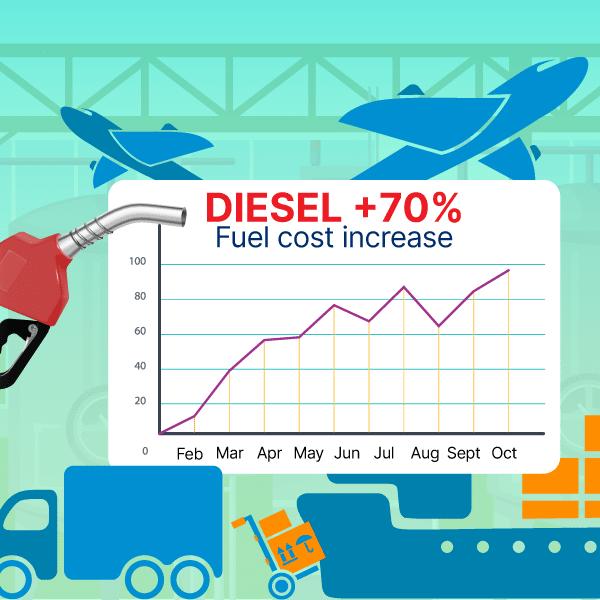
As we outlined in our Q4 Market Update, the disposable glove industry relies on one of the world’s most complex supply chains. From manufacturing facilities located primarily in Southeast Asia to distribution centers across North America, gloves travel thousands of miles before reaching healthcare facilities, food processors, manufacturers, and other end users.
Because of this global footprint, logistics remain one of the most important factors influencing product availability, service levels, and total delivered costs.
Read more in our Q4 Update on the current state and future of the disposable glove market.
A Global Journey
Most disposable gloves sold in North America are manufactured overseas and transported through international shipping networks. Along the way, multiple logistical components influence the final landed cost of disposable gloves.
Ocean freight, fuel costs, container availability, port operations, customs processing, trucking capacity, warehousing, and inventory management all contribute to the overall supply-chain equation. Even small changes in these categories can affect the cost and timing of glove deliveries.
The Impact of Supply Chain Dynamics
Supply chains rarely move in a straight line. A period of lower freight rates may create optimism, while a temporary shipping disruption may generate concern about future availability. However, short-term events do not always represent long-term trends.
The glove market has repeatedly demonstrated the importance of evaluating logistics conditions holistically rather than focusing on individual events. Most inventory is ordered several months in advance, and market participants must account for multiple moving pieces that can change simultaneously across regions and transportation modes.
Why Small Cost Changes Matter
Disposable gloves are often high-volume, relatively low-cost consumables. This means seemingly minor increases in logistics expenses can have a meaningful impact.
Fuel costs provide a good example. A rise in diesel prices affects nearly every transportation stage, including port handling, regional distribution, and final-mile delivery. Warehousing expenses, labor costs, and equipment availability can also influence total landed costs. Individually, these cost increases may appear modest. Collectively, they can have a significant impact on glove prices.
Building Supply Chain Resilience
Efficient disposable glove suppliers can reduce exposure to logistics volatility by adopting proactive planning practices. Maintaining appropriate inventory levels, sharing forecasts with suppliers, identifying critical SKUs, and evaluating supplier capabilities are all important strategies.
Glove buyers that communicate expected demand earlier often gain improved visibility into production schedules and inventory allocation. Strong supplier relationships also help support smoother operations during periods of transportation disruption or changing market conditions.
Looking Ahead
The logistics landscape continues to evolve as global trade patterns, transportation costs, and economic activity shift. While improvements may occur in one area, new challenges can emerge elsewhere.
For glove buyers, success increasingly depends on understanding the entire supply chain rather than focusing solely on product pricing. Reliable logistics, consistent inventory availability, and responsive supplier support remain essential components of a successful disposable glove procurement strategy.
Read more about the impact of logistics on the disposable glove market in our recent Q4 Market Update.
AMMEX® | The Right Glove for the Job®