


In the food service industry, preventing cross-contamination of all kinds is Job One. When you’re preparing food for customers with allergies, it’s even more important.
Disposable gloves are critical, as they provide a barrier that helps ensure allergen-sensitive food preparation is uncontaminated. Allergens are always top of mind at AMMEX—and we have the right gloves for the job.
Cross-contamination occurs when allergens, pathogens, or contaminants are unintentionally transferred from one food item to another. This usually happens through direct contact, such as using the same utensils, surfaces, or gloves on both allergen-containing and allergen-free foods, or neglecting to wear proper hand protection altogether. Nut allergies get a lot of attention, and rightfully so, but food prep is rife with dangers from countless allergens.
Thousands of people are estimated to visit U.S. emergency rooms annually because of allergic reactions to food. Somewhere around 150 to 200 people die in the U.S. each year because of food allergies. It’s estimated that between 50 and 62 percent of those fatal cases of anaphylaxis were caused by peanut allergies.
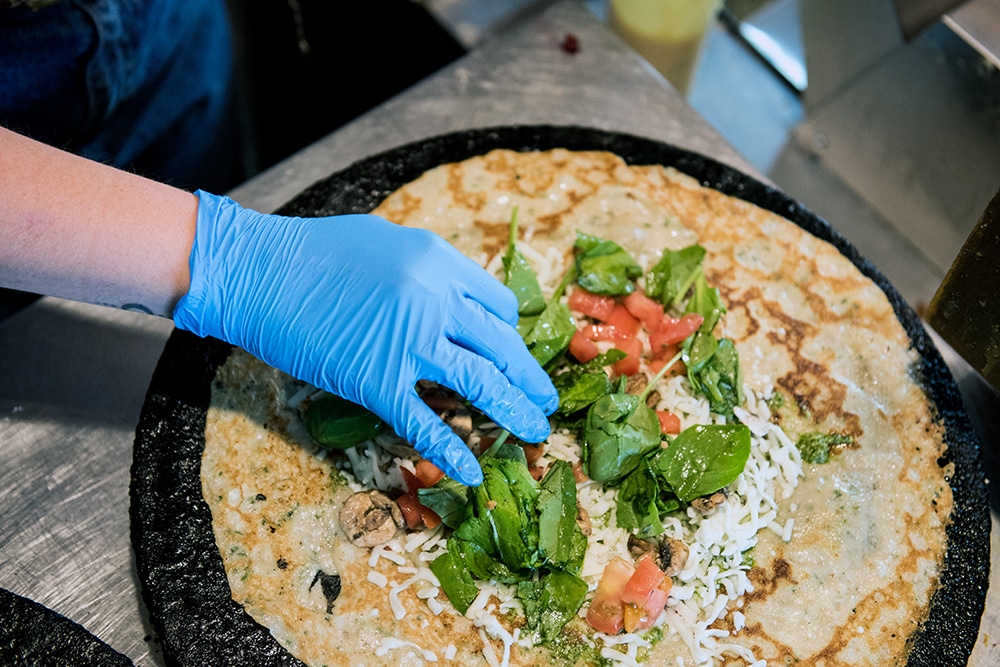
Prevention starts with choosing the right gloves. Glove materials should be based on the task. Nitrile gloves are highly recommended for allergen-sensitive food prep due to their superior puncture resistance, durability, and chemical resistance compared with latex or vinyl gloves.
We recommend X3 Nitrile Gloves in black or blue. They are only 3 mils thick to provide dexterity and comfort yet still deliver more than enough barrier protection. If you need a stronger barrier, try 5-mil Gloveworks Black Nitrile (GPNB) for even better protection along with excellent comfort.
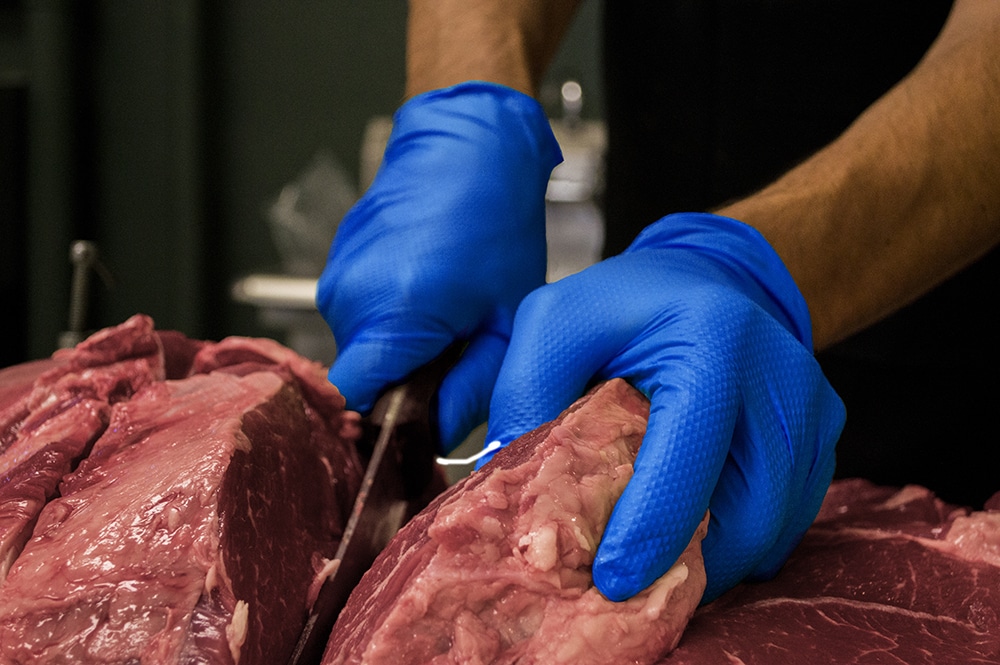
If you need something even sturdier, Gloveworks Nitrile with Raised Diamond Texture in orange, green, black, or royal blue— are a great choice for handling uncooked meat.
A strict single-use policy is a given: Gloves should be changed between tasks and after handling allergen-containing foods. Also, staff should be trained on the correct techniques for putting on and taking off gloves to minimize the risk of contamination. That begins with workers washing their hands thoroughly before putting on a new pair of gloves.
It’s also important to establish dedicated workstations and utensils for allergen-sensitive food prep. Gloves should be changed when moving between these dedicated areas and other parts of the kitchen.
Simple color-coding works great
Color-coded gloves are great for distinguishing between different tasks or allergen-specific preparations. Blue gloves could be used for handling allergen-free foods, while another color is reserved for allergen-containing foods.
Clearly label allergen-containing foods and communicate any allergen-related information to all kitchen staff. Be sure to conduct regular training sessions to reinforce the importance of proper glove use and the protocols for allergen-sensitive food prep.
Working with food is always a high-stakes proposition. One slipup can bring a world of hurt to any food-service entity, especially if a customer’s allergic reaction is severe.
Want to learn more? Check with AMMEX—we always have the right glove for the job.