In the disposable glove industry, compliance is often not mentioned until something goes wrong. A shipment gets delayed, a factory shuts down, and suddenly it all becomes urgent.
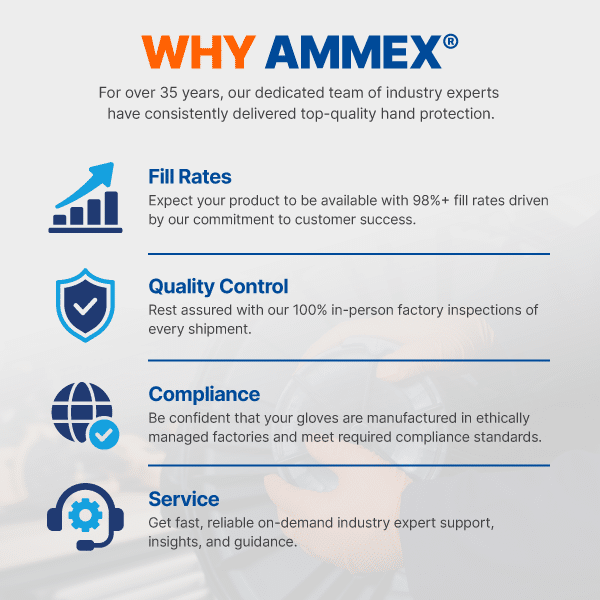
At AMMEX, compliance is a priority because it protects our customers. By proactively incorporating compliance into our core operations, we identify potential issues early and resolve them before they impact our customers.
We have a robust Compliance Program that combines ethical sourcing policies, processes and audits. AMMEX combines extensive controls of a vertically integrated supplier and allows for flexible, multi-source production. Our Compliance Program effectively reduces compliance risk and protects you from the cost of product delays caused by addressing these issues.
We import thousands of containers each year, and our goal is simple: you receive compliant, reliable products. If a shipment were ever held up, and anyone who’s experienced this knows how costly it can be, our redundant sourcing allows us to keep fulfilling orders while we resolve the issue. Customers appreciate that we shoulder the risk, so they don’t have to.
Three Ways AMMEX Compliance Reduces Potential Risk
- Shipments that stay on track.
Some disposable gloves may come with compliance risks, increasing the chances that your shipment could get delayed. Our program combines extensive controls of a vertically integrated supplier and allows for multi-source production protecting you from the cost of product delays caused by addressing compliance issues.
- Strong supply chain policies.
AMMEX puts a focus on responsible sourcing requiring all our suppliers to comply with local and international regulations creating better working conditions and high-quality products.
- Reliable long-term partnerships.
We utilize both an internal and SMETA audit to proactively identify issues and solve them together with our production teams to deliver quality products to you. You can trust AMMEX to ensure your gloves are produced to industry standards.
Compliant and Committed to Ethical Sourcing
AMMEX is a member of SEDEX, a global organization that helps companies build socially and environmentally responsible supply chains. We require our suppliers to join SEDEX as well and to operate ethically managed factories.
We also use SMETA audits, the most widely adopted social audit format in the world, to assess working conditions and ensure our suppliers meet ethical and legal standards. These audits help confirm that our partners deliver high-quality, compliant products.
Our commitment to compliance reflects our commitment to safety, quality, and social responsibility. It ensures consistent products, ethical sourcing, and confidence for everyone—from manufacturers to distributors to end users.
AMMEX® The Right Glove for The Job™