


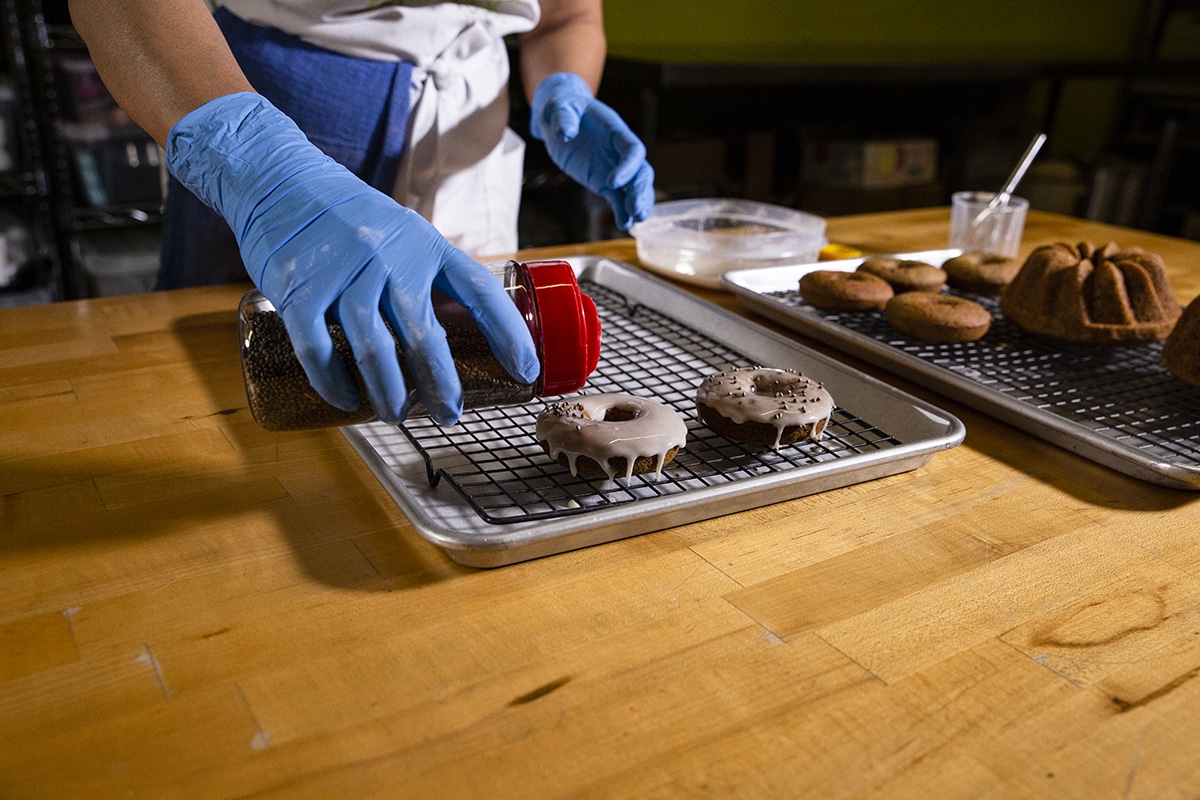
One of the most common questions we get, whether from calls to our customer service line or asked of our reps at trade shows, is “Are disposable gloves food safe?”
Simple answer: Yes. For all intents and purposes, on the macro level, all disposable glove materials are safe to use with food. That said, there are nuances to consider.
Nitrile is the most universally accepted disposable glove material for working with food. Even 3-mil nitrile gloves like X3 Black Nitrile (BX3) and X3 Blue Nitrile (X3) deliver strong barrier protection and resist punctures, rips, and tears better than most comparable gloves. They feature excellent fit, feel, and dexterity for working with kitchen utensils.
Vinyl also has a strong following because of the cost savings it provides. Both X3 Clear Vinyl (GPX3) and Gloveworks Blue Vinyl (IVBPF) are popular choices for cost-conscious food operations. Vinyl gloves have a looser fit and a smooth, comfortable feel, so they are not as precise as their nitrile counterparts. Their lower price makes them attractive for tasks that require frequent glove changes, like food prep and cleanup.
Poly gloves, which are made from polyethylene, are the most basic and least protective hand covering. They are also the cheapest and are used for the lightest-duty tasks. X3 Clear Poly Gloves (PGLOVE-500) are acceptable if all you’re doing is making sandwiches, handling ready-to-eat food, or maybe putting toppings on a pizza.
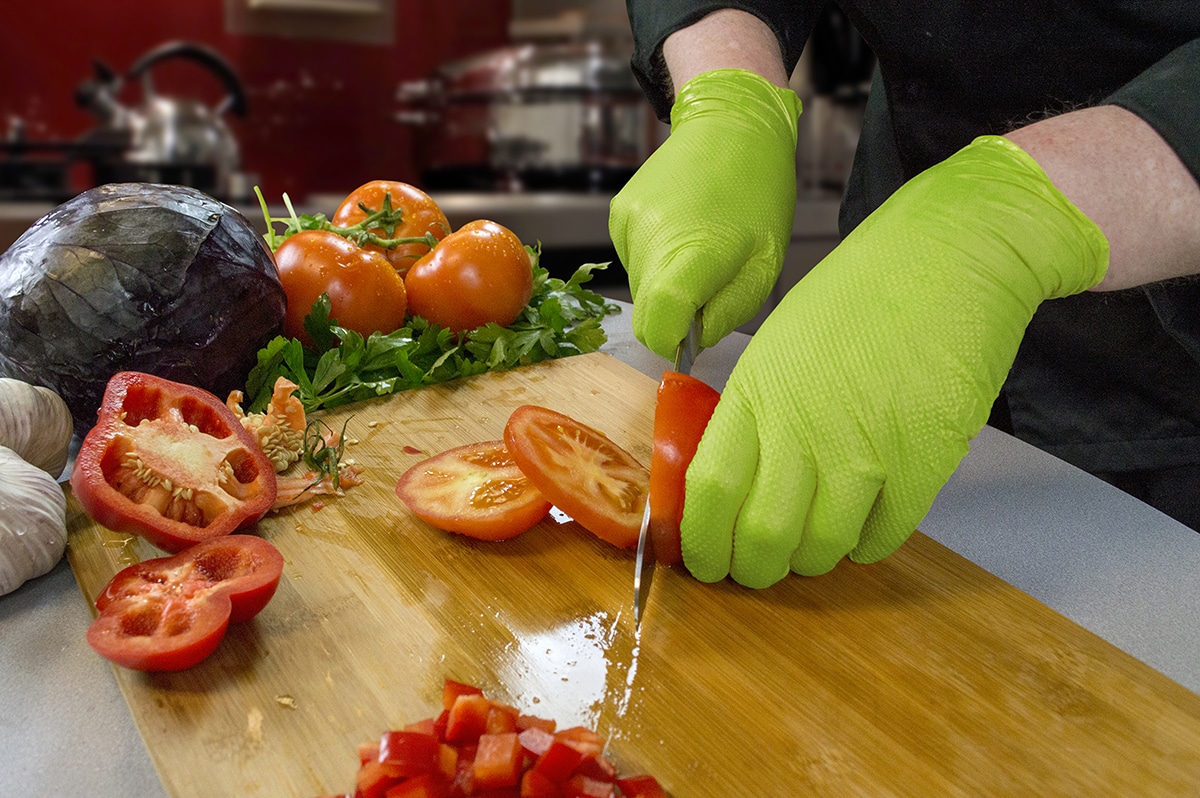
Latex is where things can get complicated. While everyone from taco trucks to five-star restaurants has at one time or another used latex gloves, we do not recommend they be used with preparing or serving food because of the risk of affecting those afflicted with latex allergies.
In truth, such allergies are rare. They affect approximately 1 percent of the general population and 8 to 12 percent of healthcare workers. (Latex allergies become more prevalent in people who are exposed to the material regularly, and most medical-grade gloves have for many years been made from latex.)
That said—because the allergic response to latex can be severe—if even 1 in 1,000 people is potentially affected, it’s not a risk worth taking. Nine states—Arizona, California, Connecticut, Hawaii, Illinois, Massachusetts, Ohio, Oregon, and Rhode Island—have banned the use of latex gloves with food, which only reinforces that nitrile is a better choice.
When it comes to cross-contamination, the primary cause in food preparation is not from the materials from which disposable gloves are made, but is directly attributable to improper hand sanitation. The Centers for Disease Control and Prevention offers a wealth of information on this.
Cleanliness is the bare minimum
Hands should be washed (and dried) before putting on gloves and after gloves are removed. Work areas should be cleaned and sanitized between tasks. All food and packaging detritus should be disposed of regularly.
In the end, food service operators and their customers just want confirmation of food safety. Food safety of gloves is regulated by the FDA: All AMMEX glove products are manufactured in FDA-inspected and ISO 9001:2015-registered facilities for industrial grade gloves. The USDA regulates glove material components only.
The component materials used in all AMMEX gloves and protective coverings comply with FDA 21CFR 170-199 for food contact. There is no such thing as an official certification for food safety.
Do you have doubts? Ask your AMMEX rep.