


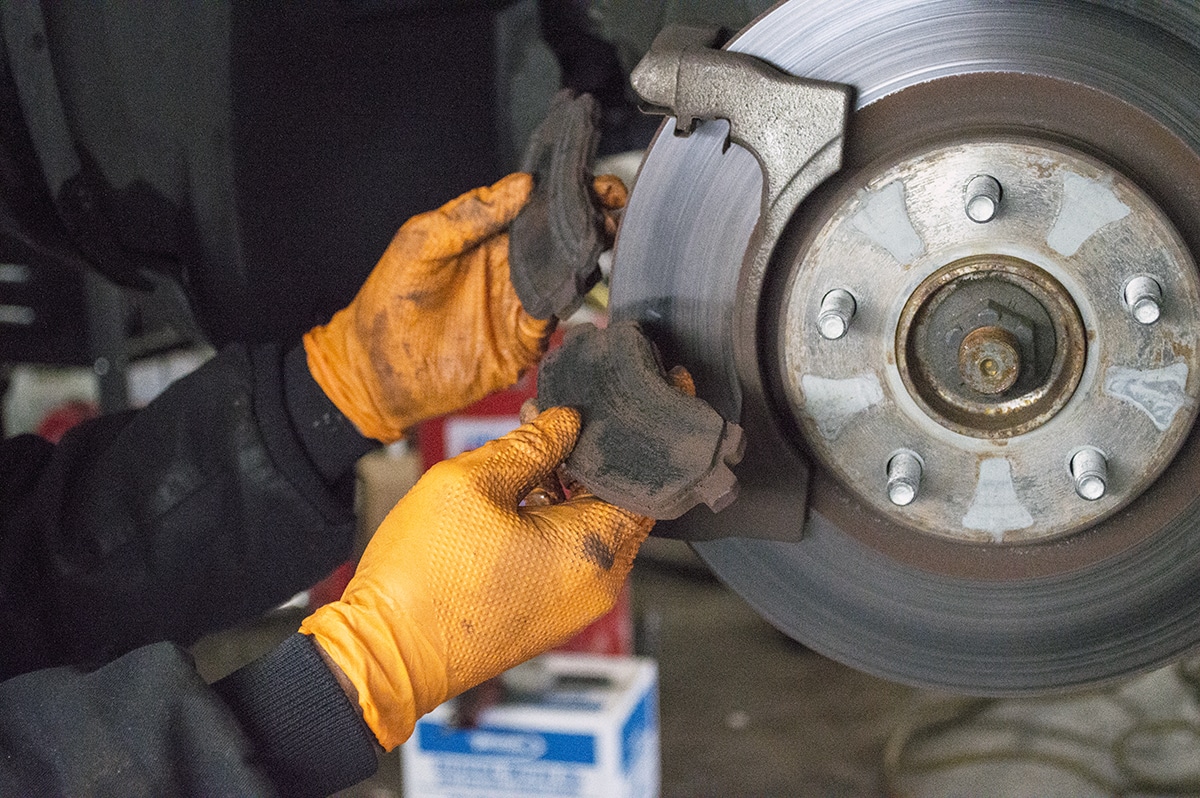
Everybody knows that nitrile disposable gloves are best for working with chemicals, especially in automotive maintenance. Right?
Of course, they do (or they at least should). Nitrile—made from nitrile butadiene rubber, a petroleum-based synthetic rubber alternative—is the material of choice for millions of workers whose hands are exposed to harsh chemicals.
At the same time, nitrile is not a “one glove fits all” solution. There is also a place in the automotive environment for latex gloves, depending on the task and the chemicals involved. Even vinyl gloves can fit for such tasks as auto detailing and general shop cleanup.
How do you decide? Start by looking at which chemicals are present on your shop floor, and what work your techs are doing. Then turn to AMMEX’s Chemical Resistance Chart, which lists commonly used chemicals and the gloves that are recommended for use with them.
If nitrile is on the list, reach first for Gloveworks Nitrile with Raised Diamond Texture (RDT) in orange, green, black, or royal blue. Longtime favorites in automotive and other heavy-duty applications, they are 6 or 8 mils thick with a superior grip thanks to their diamond texture.
Next, if dexterity and all-around performance are needed, we encourage another nitrile choice, Gloveworks Black Nitrile (GPNB). At 5 mils, the glove provides protection and comfort, paired with a black color that conceals dirt and grime for a more professional look.

Next, consider a latex glove as a regular item in your toolbox. The 8-mil Gloveworks Ivory Latex (ILHD) and 4-mil Gloveworks Ivory Latex (TLF) offer good protection against such solutions as nitric acid, sulfuric acid, formaldehyde, sodium hydroxide, and acetic acid. Latex gloves are also effective against water-based chemicals. (And there’s the supreme comfort that comes with latex—but do be mindful of allergic reactions.)
Another latex glove that appeals to a niche market is Gloveworks Exam Blue Latex (GPLHD). At 14 mils thick—more than triple the thickness of standard latex exam gloves, with a 12-inch extended cuff—they offer an amazing combination of protection and comfort.
Don’t forget a lighter-weight touch
Finally, having lightweight nitrile and vinyl gloves on hand is advisable for quick cleanups that don’t involve dangerous materials. If you’re detailing cars or otherwise working in the car’s interior, vinyl gloves like 3-mil X3 Clear Vinyl (GPX3) are both dependable and bargain-conscious. They also work well for jan/san use and other one-and-done jobs.
For extra dexterity and more than enough protection for such jobs as oil changes and battery swap-outs, we recommend X3 Black (BX3) and Blue Nitrile (X3).
Working on cars and trucks is more computerized than ever, and the growing popularity of electric cars is redefining the automotive engine. The basics of dirty, difficult, and dangerous work, however, have not changed. The industry is experiencing ever-growing adoption of gloves, but it’s not a buy-one-glove-for-everybody situation—users want options.
Not all gloves are created equal. A common misconception is that nitrile is perfect for everything automotive. While it is awesome, there are situations where choice is important.
Talk with one of our reps about which gloves are right for your needs.