2025 in Review: Market Summary – Disposable Gloves

As we look back at 2025, it is easy to surmise that the US disposable glove market has been volatile but resilient, driven by strong demand across healthcare, industrial, and personal care sectors despite economic headwinds and the impact of tariffs on imports.

Global consumption of nitrile gloves, the most popular material, has surpassed 400 billion gloves, with Southeast Asia continuing to supply over 80% of the worldwide output. At the same time, the US domestic production remains minimal due to high production costs and scalability challenges.

Overall, tariffs, logistics, and supply chain have impacted the 2025 disposable glove market in ways rarely seen before.  Despite pricing pressures, demand remains resilient, and the need for disposable gloves continues to grow.

Tariff Impact

Sweeping U.S. tariffs on imported gloves have had a substantial impact on sourcing. Since their introduction earlier in 2025, import tariffs on disposable gloves now range between 19% and 70%, with Chinese disposable gloves facing an additional 50% hike on January 1st, 2026.

These tariffs have shifted demand toward Southeast Asia (Malaysia, Vietnam, Indonesia), while Chinese suppliers have lost competitiveness in the US market.

Pricing Trends

Naturally, prices on disposable gloves are rising due to several factors. Outside of tariffs, higher raw material costs (especially NBR for nitrile gloves), increased logistics costs from port congestion, container shortages, and energy price volatility all contributed to price impacts in 2025. Spot orders and short-term sourcing continue to be risky; strategic sourcing and long-term contracts are recommended.

Logistics & Supply Chain

Shipping lanes from Southeast Asia to the U.S. were subject to volatile freight rates in 2025. US domestic freight costs are rising due to labor shortages and compliance costs. Environmental regulations on shipping have slowly been further adding to cost pressures.

Demand Outlook

Despite all the dynamic challenges outlined above, demand for disposable gloves remains steady and recession-resistant, especially in healthcare and industrial sectors. Buyers are advised to plan and maintain strong supplier relationships to mitigate risk.

Throughout 2025, AMMEX continued to proactively work to mitigate the impact of market conditions on our partners. Looking forward, we will continue to evaluate the market and update our partners on any changes in market conditions.

Why Proper Donning and Doffing of Disposable Gloves Matters

Donning and Doffing of Disposable Gloves

Disposable gloves are a frontline defense in countless industries from healthcare and food service to automotive and janitorial work. They protect workers from harmful substances and prevent contamination of products and environments. But here’s the catch: gloves only work if they’re used correctly. Improper donning (putting on) and doffing (taking off) can compromise safety, leading to contamination, infection, or chemical exposure.

The Risks of Getting It Wrong

When gloves are donned incorrectly, contaminants can transfer from hands to the glove’s exterior. Similarly, improper removal can expose your skin to hazardous substances lingering on the glove surface. According to CDC guidelines, the outside of gloves should always be considered contaminated, and touching them with bare hands during removal is a major risk factor for self-contamination.

Best Practices for Donning Gloves

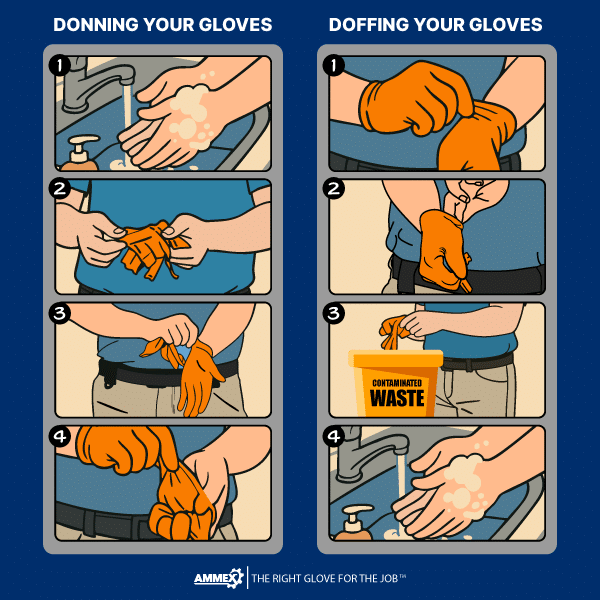
  1. Start Clean: Wash and dry your hands thoroughly before putting on gloves. Remove any jewelry that could tear the material.
  2. Inspect Before Use: Check for pinholes, tears, or defects. Even a small breach can allow harmful substances through.
  3. Avoid Touching the Outside: Handle gloves by the cuff and only touch the inside during donning. This minimizes contamination risk.
  4. Ensure Proper Fit: Gloves should fit snugly without overstretching, which can cause tears.

Safe Doffing Techniques

  • Peel, Don’t Pull: Grasp the outside of one glove near the wrist and peel it away, turning it inside out. Hold it in the gloved hand.
  • Slide Under the Cuff: With your ungloved hand, slide fingers under the remaining glove at the wrist and peel it off over the first glove, creating a “bag” for both. Discard immediately in an appropriate container.
  • Finish with Hand Hygiene: Always wash your hands after glove removal to eliminate any residual contamination.

Check out our donning and doffing flyer for more information.

Why It Matters for Your Business

Proper glove use isn’t just about compliance—it’s about protecting your team, your customers, and your brand. A single lapse can lead to cross-contamination, product recalls, or even workplace injuries. Training staff on correct donning and doffing procedures is a small investment with a big payoff in safety and trust.

Gloves are a critical barrier, but they’re not foolproof. Their effectiveness depends on how you use them. By following best practices for donning and doffing, you ensure maximum protection for everyone involved.

Disposable Glove Market in Q4 2025 – Trends and Challenges

If you find the overall dynamic of the U.S. disposable glove market in Q4 2025 a bit confusing, then you’re not alone. The market is facing a period of dynamic change as we enter Q4 2025. New tariffs, operational costs, and a shifting economic landscape are shaping the industry. Despite these headwinds, demand for disposable gloves remains robust across the medical, industrial, and personal care sectors.

Our Q4 Market Update provides a broad overview of the key trends and challenges – download it or view it on our website here.

One of the most impactful developments is the sweeping tariffs imposed by the U.S. government, particularly targeting imports from China. By the end of Q3, tariffs on disposable gloves from all countries ranged from 19% to 80%, with Chinese imports set for an additional 50% increase in 2026. This has put upward pressure on prices and forced buyers to rethink sourcing strategies.

Global glove production is at an all-time high, with Malaysia and Thailand leading the way and accounting for up to 70% of global supply. However, U.S. domestic production remains limited due to high input costs, regulatory hurdles, and scalability challenges.

Logistics remains in focus, with rising operational delivery costs in the US. As a result, efficiency and proactive planning are more important than ever for glove buyers.

Despite these challenges, the market’s resilience is clear. Strategic sourcing and strong supplier relationships will be key to navigating the months ahead. Learn more in our Q4 Market Update.

Stop Guessing. Find the Right Disposable Glove with a No-cost Trial.

Glove Trial

Choosing disposable gloves shouldn’t require guesswork or a pile of half‑used boxes that didn’t work out. Tasks vary, hands sweat, chemicals differ, and not all textures grip the same. The result? Wasted spend, frustrated teams, and inconsistent protection.

That’s why AMMEX built the 30‑Day Glove Trial Program: a no‑cost, try‑before‑you‑buy experience that lets you test the right gloves in your environment before you commit. You’ll get tailored product recommendations (Good/Better/Best) for your specific use case, then evaluate them with your team in real work—no guessing required.

How the AMMEX Glove Trial Works

Sign Up Online – Apply in minutes at https://info.ammex.com/glovetrial-public

Receive Free Gloves – Get up to 10 cases of disposable gloves shipped at no cost.

Experience the Difference – Use AMMEX gloves for 30 days, then connect with a distributor for ongoing supply.

Why AMMEX Disposable Gloves

Choosing AMMEX means choosing confidence. When you try our gloves, you’re not just testing a product, you’re experiencing a brand built on quality, consistency, and meaningful innovation. Every glove we make is engineered to solve real-world problems like grip in wet or oily conditions, durability under torque, and all‑day comfort that encourages people to keep their gloves on. The AMMEX 30‑Day Glove Trial removes the guesswork and the risk by letting your team evaluate the right options in real world applications.

Our glove experts will help match material, thickness, and texture to your tasks, then follow through with dependable supply and expert support. When the trial ends, you’ll have clear feedback from your team and a straightforward path to ongoing supply through our distributor network so your operation can move from “let’s test it” to “this is the glove we trust” with confidence.

Ready to start your free glove trial?

Visit https://info.ammex.com/glovetrial-public and discover why AMMEX is the leader in disposable hand protection.

Check out our previous blog post: Serving Customers: It’s What We Do

Why 100% Shipment Inspections are Critical

Why 100% Shipment Inspections are Critical

Does every disposable glove shipment pass an independent in-person inspection?  Of course not, unless it’s an AMMEX-branded glove.

Quality in disposable gloves is essential, but with hundreds of billions of gloves coming off the line yearly and usage consistently growing, quality rates remain imperfect. While manufacturing processes, raw material, and technology are better than ever, the sheer volume of gloves makes production mistakes unavoidable. AMMEX’s emphasis on rigorous standards and durable gloves illustrates how quality drives safety and user satisfaction.

Specifically, our highly experienced and dedicated team of inspectors based in Southeast Asia works to inspect 100% of shipments personally. Our team visits every factory and tests every container while keeping meticulous records, facilitating audits, and working with our partners to optimize manufacturing processes. Our inspectors are AMMEX employees; most have been with the company for many years.

Why do we do this? In an industry where most companies receive gloves they see for the first time in their US warehouse, AMMEX is different. We understand that each quality issue impacts our customers’ business, reputation, relationships, and trust. Simply put, we invest in 100% in-person inspections by our local teams to prevent quality issues before they happen, minimizing headaches for our clients and saving them time and money.

Most glove buyers will agree that disposable glove quality is non-negotiable. Quality gloves protect health, enhance performance, ensure compliance, offer cost benefits, and support positive user experience. However, it’s essential to understand your glove supplier’s standards and how they handle any related issues and implement improvements. AMMEX does this with 100% commitment and dedication – documented, audited, and in-person.

Check out our previous post about Three Unique Reasons Why Service Matters with Disposable Gloves.

Three Unique Reasons Why Service Matters with Disposable Gloves

AMMEX sets the standard in disposable gloves with expert reps, fast delivery, and standout service that drives savings, trust, and long-term success.

In the disposable glove industry, exceptional service isn’t just a friendly add-on; it’s a necessity that helps customers buy the right glove. Disposable glove products may seem simple, but most companies routinely offer 40+ product options. Customer service at AMMEX shows that service excellence sets industry leaders apart in three unique ways.

First, an account at AMMEX is actively managed by a dedicated sales representative, who allows for a detailed understanding of customer needs and wants. Our expert representatives can effectively align one of our glove products with the customer’s needs.

Second, our personalized service allows us the opportunity to efficiently explain to prospects and customers why AMMEX is different and what sets us apart from the competition.  From our industry-leading product fill rates to in-person quality control and compliance processes, our service team can offer proof of how AMMEX does things differently.

Third, in a fast-moving market, speed and flexibility matter. AMMEX responds quickly to orders, often delivering within days, and adapts to shifting demands or market opportunities—thanks to agile systems and customer feedback loops.

A real-world example underscores these strengths. Recently, a distributor using AMMEX gloves reversed rising costs by replacing their glove vendor with alternatives recommended by an AMMEX representative. The savings become even more impactful when considering that AMMEX provided higher on-time fill rates to reduce storage costs, improved quality to minimize customer concerns, and tools such as no-cost samples to help make glove user decisions easier.

In a disposable glove market with low-cost options, outstanding service can help distinguish the leader from the rest. AMMEX’s approach demonstrates that service isn’t a luxury in the disposable glove industry; it’s the foundation of customer trust, efficiency, and long-term success.

Check out our previous blog post about How AMMEX Supports Buyers in a Volatile Glove Market.

Silicone-Free Disposable Gloves Are Essential Protection for Auto Paint and Finishing

Silicone-Free Disposable Gloves Are Essential Protection for Auto Paint and Finishing

The most minor details can make the most significant difference in auto painting and finishing. One often-overlooked detail? Disposable gloves. The right pair doesn’t just protect your hands; it protects the integrity of your paint job. And if you’re serious about keeping silicone away from your surface prep and finish, it’s time to take a closer look at silicone-free glove options.

Why Silicone-Free Matters in Auto Paint Work
Silicone contamination is the enemy of flawless finishes. Even trace amounts can wreak havoc:

  • Causes fish-eye effects in paint
  • Interferes with paint adhesion
  • Requires costly rework and delays

AMMEX offers two top products that not only deliver excellent hand protection from paints and solvents, but are also silicone-free to ensure a great finish:

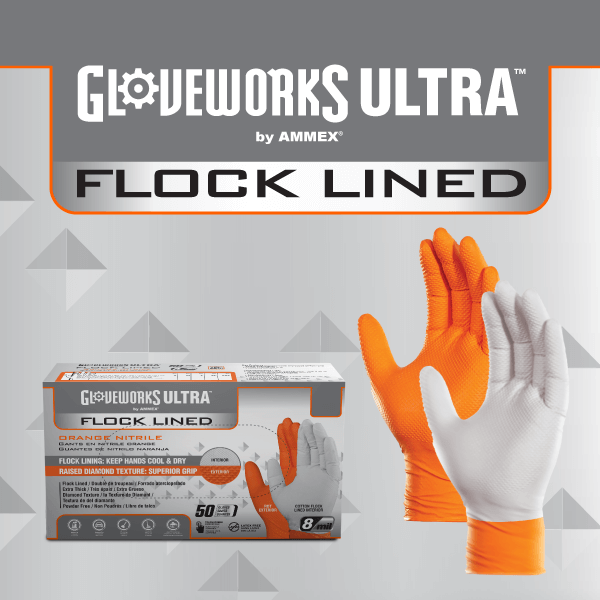
Gloveworks® Orange Raised Diamond Texture Nitrile Gloves (GWON):
These aren’t your average shop gloves. GWON gloves stand out, with their high-visibility orange color and raised diamond texture that delivers unbeatable grip in oily, wet conditions.

Key Features:

  • Heavy-duty 8-mil thickness for enhanced durability and grip
  • Raised diamond grip channels away fluids for secure handling
  • Resistant to chemicals like paints, solvents and cleaners
  • Latex- and silicone-free for clean operations

Download the GWON data sheet here.

Also available in high-res green Gloveworks® Green Raised Diamond Texture Nitrile Gloves (GWGN).

Download the GWGN data sheet here.

Gloveworks® Black Nitrile Gloves (GPNB):
Preferred in many auto shops for their professional appearance, these gloves bring the same toughness in a sleek, low-profile design.

Key Features:

  • 6-mil thickness for excellent barrier protection
  • Powder-free and latex-free to prevent contamination
  • Silicone-free for paint-safe performance
  • Ideal for general shop work, polishing, and cleanup
  • Black nitrile hides grease and grime, giving a cleaner look while staying strong through messy tasks

Download the GPNB data sheet here.

Don’t let your gloves be the weak link when the finish matters. Gloveworks GWON and GPNB offer the safety, performance, and peace of mind auto professionals need without the risk of silicone contamination. Whether laying down a base coat or polishing the final layer, choosing the right gloves is more than protection; it’s precision.

Check out our previous blog post about silicone-free gloves here.

5 Key Reasons to Use Lightweight Nitrile Gloves Instead of Vinyl

Glove comparison chart.

Most vinyl gloves are made in China, and tariffs have made those much more expensive.  Now may be a time to shift from vinyl disposable gloves to lightweight nitrile.  Nitrile offers several advantages: performance, safety, environmental impact, and user comfort.

Here’s an outline of the five key benefits:

1. Enhanced Protection and Performance

Nitrile gloves are more resistant to a wider range of chemicals, oils, and solvents than vinyl gloves. They are also more puncture-resistant than vinyl gloves, improving durability and protection.

2. Improved Comfort and Fit

Nitrile conforms more closely to the hand, providing a snug, comfortable fit and greater dexterity compared to gloves of similar thickness. The ergonomic fit of lightweight nitrile gloves helps minimize strain during extended use. Like vinyl, nitrile is latex-free but without the associated loss of stretch and comfort seen in vinyl.

3. Sustainability

Lightweight nitrile gloves are more durable and longer-lasting than vinyl gloves, which may require frequent changes and more gloves to complete the same task. Nitrile also has better aging properties than vinyl, reducing product waste from expired stock.

4. Regulatory and Industry Compliance

Nitrile gloves meet more stringent standards (e.g., ASTM, EN) for medical and industrial use and have fewer issues with chemical ingredients that are more common with vinyl.

5. Cost Efficiency Over Time

Nitrile gloves are more durable and reduce the need for frequent replacements, improving cost-effectiveness and sustainability. Nitrile gloves are suitable for a broader range of tasks, reducing the need for multiple glove types in one facility.

In sum, lightweight nitrile gloves offer a superior choice for hand protection. AMMEX provides a broad range of options in lightweight nitrile, such as X3 Industrial Blue or Black Nitrile Gloves and AMMEX Professional Exam Blue Nitrile gloves.

Check out our previous post about the benefits of lightweight nitrile here.

Do disposable gloves protect from Fentanyl?

A law enforcement officer wears Gloveworks black nitrile gloves while holding a walkie talkie.

The question of fentanyl protection is simple, but the answer has several nuances that involve the types of gloves and a variety of use cases. We’ll make it simple: Studies show that nitrile gloves offer protection from fentanyl. Latex and vinyl should not be used to protect from fentanyl permeation.

CDC guidelines make it very clear what to do when potential contact with fentanyl exists. First responders are most at risk, but those rules and procedures can apply to everyone. Fentanyl-resistant nitrile gloves provide a crucial barrier against accidental exposure, helping to prevent serious health consequences. These gloves meet the ASTM D6978 standard, ensuring they resist permeation from fentanyl for up to 240 minutes.

At AMMEX, we’ve covered fentanyl protection before, and the issue has only gotten bigger since then. AMMEX has five great nitrile glove options that have been tested to resist fentanyl meeting the ASTM D6978 standard:

  • Gloveworks® Exam Black Nitrile Disposable Gloves (GWBEN)
  • Professional Exam Blue Nitrile Disposable Gloves (ACNPF)
  • Professional Exam Indigo Nitrile Disposable Gloves (AINPF)
  • Professional Exam Black Nitrile Disposable Gloves (ABNPF)
  • Professional Exam Blue Nitrile Disposable Gloves (APFN)

Along with the quality of our nitrile disposable gloves and their ability to protect from fentanyl, we are most proud of our ability to bring these products to the market consistently. With over 98% fill rates, our customers can be sure we have them in stock and ready to ship immediately.

“Beyond the needed focus on glove offering hand protection from fentanyl, we are placing priority on ensuring that our customers have unsurpassed, reliable access to these nitrile disposable gloves with our outstanding fill rates, top-notch customer service, and logistics support”, says Andre Chernih, Chief Marketing Officer at AMMEX.

Next time you have a question about fentanyl hand protection, reach out to AMMEX.

Check out our previous blog posts about hand protection from fentanyl here.

Q2 Market Update: Logistics Always a Factor

Q2 Market Update: Logistics Always a Factor

Second in a series

As outlined in our Q2 Market Update, despite the current global tariff wars, the demand outlook in the disposable glove industry remains steady. Gloves are a need-based product; customers use them regardless of market conditions. Global demand for medical and industrial-grade nitrile gloves continues to expand with consistent consumption patterns.

Ocean freight rates continue to be volatile. The industry survey by maritime consultancy Drewry reveals that most container shipping stakeholders expect Suez Canal transits to resume before the end of 2025 while bracing for escalating U.S. tariffs that could reshape global trade patterns.

Rates will likely remain volatile as port congestion continues in major Asian manufacturing hubs, fuel costs rise due to geopolitical tensions in oil-producing regions, container shortages are exacerbated by uneven global trade recovery, and implementation of new environmental rules requires shipping lines to invest in cleaner technologies.

The final leg of distribution has also become increasingly expensive, with last-mile delivery costs rising. Increases are attributable to labor shortages in the trucking and delivery sectors, higher fuel costs for ground transportation, increased warehousing costs as distributors maintain larger safety stocks, and regional regulatory changes affecting distribution networks.

Download our Q2 Disposable Glove Market Update.

Missed our first post of the series: Q2 Market Update: Tariffs Take Centerstage check it out here.