


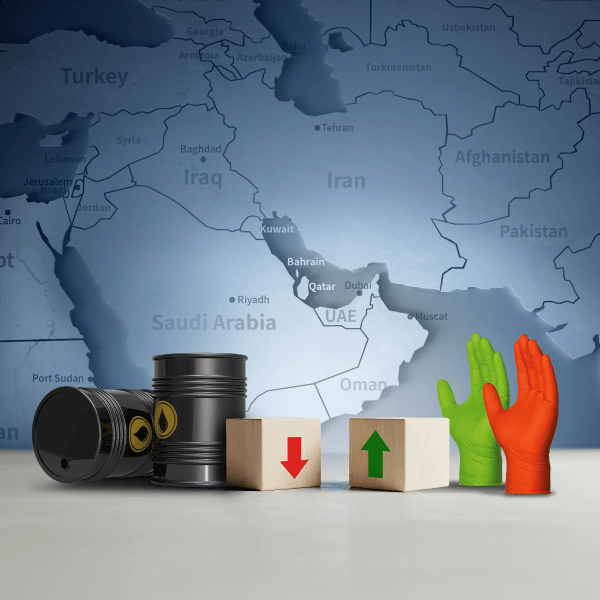
It may be easy to assume that when oil prices fall, glove prices should follow. After all, many gloves are made from oil‑derived materials. But glove pricing is not directly tied to the global price of oil and recent market conditions have made that disconnect even more apparent.
What matters far more than oil itself is the availability of oil‑based raw materials, specifically Nitrile Butadiene Rubber (NBR) and Polyvinyl Chloride (PVC). These are the primary inputs used in nitrile and vinyl disposable gloves, and their supply dynamics may tell a very different story from headline oil prices.
Crude oil is traded on a global market, with prices set daily and reported everywhere. NBR and PVC, however, are produced through specialized refining and polymer processes that are largely concentrated in Asia, the same region where much of the world’s disposable glove manufacturing takes place.
Today’s challenges are not being driven by oil prices alone. Instead, they stem from continued geopolitical instability in the Middle East and unreliable access to suitable crude oil for downstream processing. These conditions have disrupted refinery operations in Asia, where NBR and PVC supply chains are most sensitive to raw material quality, logistics, and energy reliability. As a result, even when oil prices ease, the production of glove‑grade NBR and PVC does not automatically normalize.
Because of these disruptions, the NBR and PVC supply have become increasingly uneven. Refineries are responding by limiting output, shortening supply commitments, and shifting to spot pricing rather than long‑term contracts.
For disposable glove manufacturers, this creates real challenges. When raw material availability is uncertain, it becomes harder to lock in consistent volumes at predictable prices. Manufacturers are forced to make difficult decisions: producing gloves at higher costs, reducing output, or, in some cases, temporarily pausing production altogether. Raw material supply pressures inevitably work their way downstream, affecting the availability and pricing of disposable gloves across the market.
Another important factor is timing. Even if oil prices decline meaningfully, the glove industry is unlikely to feel immediate relief. Higher‑cost NBR and PVC already purchased and committed to production are still moving through the system.
From raw material conversion to finished gloves, international shipping, and distribution, the supply chain typically operates with several months of lag time. Until higher‑cost materials are fully worked through the supply chain, pricing pressure is likely to persist.
Understanding these dynamics is critical for distributors and end users planning inventory and budgets. Glove pricing is shaped less by short‑term movements in oil markets and more by regional refining capacity, raw material availability, and geopolitical stability. This is also why experienced suppliers focus on strong manufacturer relationships and proactive supply planning. In volatile markets, reliability, transparency, and support may matter just as much as price.
For buyers, staying informed and working with partners who understand these supply‑chain realities is the best way to navigate ongoing volatility. This is where AMMEX and our commitment to high levels of customer service can help.